

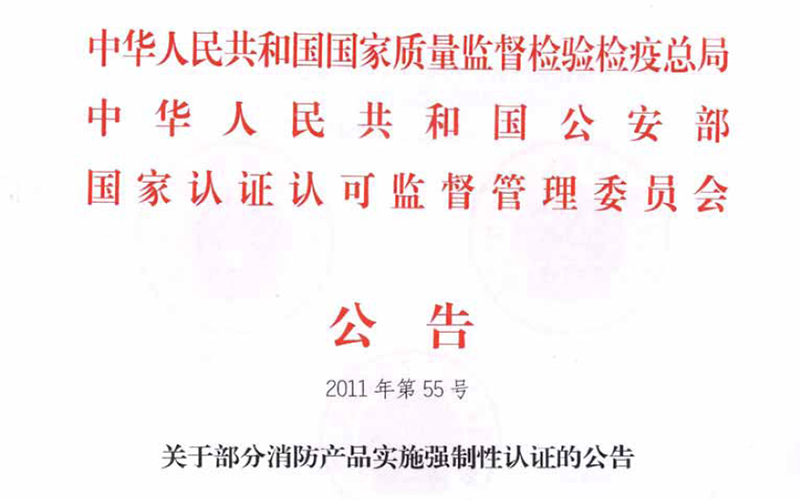
Announcement on the Supervision and Inspection Regulations for Food Production and Processing Enterprises to Implement Quality and Safety Main Responsibilities According to the "Food Safety Law of the People's Republic of China," the "Implementation Regulations of the Food Safety Law of the People's Republic of China," the "Special Provisions of the State Council on Strengthening the Supervision and Management of Food and Other Product Safety," and other relevant laws and regulations, in order to urge food production and processing enterprises to fulfill their main responsibilities for quality and safety, standardize the supervision and inspection work of food production and processing enterprises, and ensure food quality and safety, the State Administration for Market Regulation has formulated the "Supervision and Inspection Regulations for Food Production and Processing Enterprises to Implement Quality and Safety Main Responsibilities," effective from March 2010.
See More +
(General Administration Announcement No. 34 of 2010) Announcement No. 34 of 2010 Regarding Matters Related to the Use of the Enterprise Food Production License Mark To implement the Food Safety Law and its implementing regulations, to properly carry out the enterprise food production licensing work, and to improve the level of food safety assurance, in accordance with relevant regulations, the enterprise food production license mark and its usage methods are hereby announced as follows: 1. Style of the Enterprise Food Production License Mark The enterprise food production license mark is abbreviated as "QS" from the pinyin of "QiyeshipinShengchanxuke" (Enterprise Food Production License).
See More +
No. 127 "Regulations on the Supervision and Administration of Food Additive Production" was approved at the bureau meeting of the General Administration of Quality Supervision, Inspection and Quarantine on March 10, 2010, and is hereby promulgated, effective June 1, 2010. Director April 4, 2010 Regulations on the Supervision and Administration of Food Additive Production Chapter 1 General Provisions Article 1 To ensure food safety and strengthen the supervision and administration of food additive production, in accordance with the "Product Quality Law of the People's Republic of China," the "Food Safety Law of the People's Republic of China" and its implementing regulations, and the "Regulations on the Administration of Industrial Product Production Licenses of the People's Republic of China"
See More +
No. 129 "Measures for the Administration of Food Production Licensing" was approved at the meeting of the State Administration for Quality Supervision, Inspection and Quarantine on March 10, 2010, and is hereby promulgated, effective from June 1, 2010. Director April 7, 2010 Measures for the Administration of Food Production Licensing Chapter 1 General Provisions Article 1 To ensure food safety, strengthen food production supervision, and regulate food production licensing activities, these measures are formulated in accordance with the Food Safety Law of the People's Republic of China and its implementing regulations, as well as laws and regulations on product quality and production licensing. Article 2 Within the territory of the People's Republic of China, enterprises engaged in food production activities and quality and technical supervision departments implementing food production licensing must comply with these measures. Article 3 Enterprises shall not engage in food production activities without obtaining a food production license. Article 4 The State Administration for Quality Supervision, Inspection and Quarantine (hereinafter referred to as the State AQSIQ) is responsible for the national food production licensing management within its scope of duties. Local quality and technical supervision departments at or above the county level are responsible for food production licensing management within their administrative regions within their scope of duties. Article 5 Food production licensing must be strictly implemented in accordance with the procedures and requirements stipulated by laws, regulations, and rules, following the principles of openness, fairness, justice, and convenience. Chapter 2 Procedures Article 6 To establish a food production enterprise, the name must be pre-approved by the industrial and commercial department, and a food production license must be obtained in accordance with food safety laws, regulations, and the relevant requirements of these measures. Article 7 Local quality and technical supervision departments at or above the county level are the implementing agencies for food production licensing, except for food production licensing implemented by the State AQSIQ according to relevant regulations. Provincial quality and technical supervision departments shall determine the scope of varieties licensed by quality and technical supervision departments within their administrative regions in accordance with relevant laws, regulations, and the requirements of the State AQSIQ. Article 8 To obtain a food production license, the applicant must comply with food safety standards and meet the following requirements: (1) Have food raw material processing and food processing, packaging, storage, and other premises suitable for the varieties and quantities of food applied for licensing, keep the environment clean, and maintain the prescribed distance from toxic, harmful places and other pollution sources; (2) Have production equipment or facilities suitable for the varieties and quantities of food applied for licensing, with corresponding equipment or facilities for disinfection, changing clothes, washing, lighting, ventilation, corrosion prevention, dust prevention, fly prevention, rodent prevention, insect prevention, washing, and treatment of wastewater, storage of garbage and waste; (3) Have reasonable equipment layout and process flow suitable for the varieties and quantities of food applied for licensing, preventing cross-contamination between food to be processed and ready-to-eat food, raw materials and finished products, and avoiding contact of food with toxic or unclean substances; (4) Have food safety professional technical personnel and management personnel suitable for the varieties and quantities of food applied for licensing; (5) Have food safety management systems suitable for the varieties and quantities of food applied for licensing, including training to ensure food safety, health checks and health records of employees, purchase inspection records, factory inspection records, raw material acceptance, and production processes. If laws, regulations, and national industrial policies have other requirements for food production, those requirements must be met. Article 9 Enterprises intending to establish food production must apply for a food production license to the quality and technical supervision department at the production location (hereinafter referred to as the licensing authority) and submit the following materials: (1) Food production license application form; (2) Copy of the applicant's identity card or qualification certificate; (3) "Name Pre-approval Notice" for the proposed food production enterprise; (4) Floor plan of the food production and processing premises and layout plan of functional areas; (5) List of food production equipment and facilities; (6) Food production process flow chart and equipment layout diagram; (7) List of food safety professional technical personnel and management personnel; (8) Text of food safety management regulations; (9) Food safety standards implemented by the product; if enterprise standards are implemented, the enterprise standards filed with the health administrative department must be provided; (10) Other supporting materials required by relevant laws and regulations. The materials submitted for the food production license application must be true, legal, and valid. The applicant shall sign and confirm the food production license application form and other materials. Article 10 The licensing authority shall handle the received application in accordance with Article 32 of the Administrative Licensing Law of the People's Republic of China and other relevant provisions. If the application is accepted, a "Notice of Acceptance" shall be issued. If the application is not accepted, a "Notice of Non-acceptance" shall be issued, stating the reasons and informing the applicant of the right to apply for administrative reconsideration or file an administrative lawsuit according to law. Article 11 After accepting the application, the licensing authority shall organize an on-site inspection of the application materials and production premises (hereinafter referred to as on-site inspection) in accordance with relevant regulations. The on-site inspection shall be conducted by an inspection team composed of two to four inspectors appointed by the licensing authority in accordance with the relevant provisions of the State AQSIQ, and the enterprise shall cooperate. Article 12 The licensing authority shall make the following decisions within the time limit prescribed by laws and regulations based on the inspection results: (1) If the production conditions meet the requirements after on-site inspection, a decision to permit production shall be made according to law, and a "Decision to Permit Food Production" shall be issued to the applicant. The food production license certificate for the establishment of the food production enterprise shall be issued within ten days from the date of the decision; (2) If the production conditions do not meet the requirements after on-site inspection, a decision to deny production permission shall be made according to law, and a "Decision to Deny Food Production License" shall be issued to the applicant with reasons. Except for force majeure, if the on-site inspection cannot be conducted within the prescribed time due to the applicant's reasons, it shall be treated as failing the on-site inspection. Article 13 The proposed food production enterprise must obtain the food production license certificate and complete the business license registration procedures according to law before organizing trial production of food according to the needs of production license inspection. Article 14 Newly established food production enterprises shall apply for production license inspection for the food varieties subject to licensing as prescribed. Upon receiving the production license inspection application, the licensing authority shall promptly sample and seal the samples according to relevant regulations and inform the applicant enterprise to submit the samples to a qualified inspection agency within seven days after sealing. Article 15 Upon receiving the samples, the inspection agency shall conduct the inspection according to the prescribed requirements and standards and issue an accurate and timely inspection report. Article 16 If the inspection conclusion is qualified, the licensing authority shall determine the scope of food production licensing based on the inspection report and record it on the annex page of the food production license. Before the licensing authority determines the scope of food production licensing, trial production food shall not be sold. Article 17 If the inspection conclusion is unqualified, reinspection may be applied for according to relevant regulations. If the reinspection conclusion shows some food varieties are unqualified, the production license scope for those varieties shall not be determined or recorded on the annex page of the food production license; the sale of such food is prohibited. If the reinspection conclusion shows all food varieties are unqualified, the food production license shall be revoked according to relevant regulations; the sale of all varieties of food is prohibited. Article 18 Enterprises already established applying for food production licenses shall hold a valid business license and apply for licensing in accordance with the conditions and requirements stipulated in this chapter. The licensing authority shall accept the licensing application of established enterprises engaged in food production according to the conditions and requirements stipulated in this chapter and decide whether to grant the license and determine the scope of food production licensing based on on-site inspection results and inspection reports, issuing the food production license certificate. Article 19 The food production license is valid for three years. Before the expiration of the validity period, enterprises holding a food production license who need to continue production shall apply for renewal to the original licensing authority six months before the expiration; if renewal is granted, the license number remains unchanged. If not renewed upon expiration, it is deemed unlicensed; enterprises intending to continue production shall reapply, be reissued a license, and receive a new license number, with validity recalculated from the date of licensing. Article 20 During the validity period of the food production license, enterprises shall apply for changes to the original licensing authority in the following cases: (1) Change of enterprise name; (2) Change of domicile or production address name; (3) Relocation of production premises; (4) Change in the environment around the production premises; (5) Change in equipment layout and process flow; (6) Change in production equipment and facilities; (7) Other circumstances requiring change application as stipulated by laws and regulations. For cases (3) to (6), the original licensing authority shall organize inspections and tests according to these measures; if conditions are met, change procedures shall be handled according to law. Article 21 Enterprises applying for changes to the food production license shall submit the following materials: (1) Application form for change of food production license; (2) Original and duplicate food production license certificates; (3) Supporting materials related to the change. The materials submitted for the change application must be true, legal, valid, and comply with relevant laws and regulations. The applicant shall sign and confirm the application form and be responsible for the legality and authenticity of its content. Article 22 During the validity period of the food production license, if relevant laws, regulations, food safety standards, or technical requirements change, the original licensing authority may reorganize inspections and tests according to national regulations. Article 23 The original licensing authority shall revoke the food production license certificate according to law in the following cases: (1) Production license is withdrawn, revoked, or the license certificate is revoked according to law; (2) Enterprise applies for cancellation or the license expires without renewal; (3) Enterprise is legally terminated; (4) Production license matters cannot be implemented due to force majeure; (5) Other circumstances requiring license cancellation as stipulated by laws and regulations. Article 24 Enterprises applying for cancellation of the food production license certificate shall submit the following materials to the original licensing authority: (1) Application form for cancellation of food production license; (2) Original and duplicate food production license certificates; (3) Supporting materials related to the cancellation. Chapter 3 Certificates and Marks Article 25 The food production license certificate consists of an original and a duplicate, and the format of the certificate and its annex page is uniformly prescribed by the State AQSIQ. Article 26 Enterprises shall properly keep the food production license certificate and display or place it prominently at the production site. If the food production license certificate is lost or damaged, the enterprise shall promptly make a declaration in media at or above the provincial level and apply for a replacement certificate in a timely manner. Article 27 Enterprises shall mark the food production license number and logo on their food or packaging; food without the license number and logo shall not be sold. Article 28 The food production license number and logo are marks of the enterprise's food production license. The rules for the license number and the logo format are uniformly prescribed by the State AQSIQ. Article 29 Enterprises shall not rent, lend, or transfer the food production license certificate and number in any other form. Forgery or alteration of the food production license certificate, number, or logo is prohibited. Chapter 4 Supervision and Inspection Article 30 Enterprises shall engage in food production activities within the scope of the licensed varieties and shall not produce food beyond the licensed scope. Article 31 Enterprises shall ensure that production conditions continuously meet the prescribed requirements and are responsible for the safety of the food they produce. Article 32 Quality and technical supervision departments at all levels shall conduct regular or irregular supervision and inspection of enterprises' food production activities within their respective duties according to law. Article 33 Quality and technical supervision departments at all levels shall establish archives management systems for food production licensing and supervision and inspection. The retention period of archives shall be implemented according to national regulations. Article 34 Quality and technical supervision departments at all levels shall establish information platforms for food production licensing and supervision and inspection to facilitate inquiries by citizens, legal persons, and other social organizations. Chapter 5 Legal Liability Article 35 Violations of Article 3, the second paragraph of Article 16, the second and third paragraphs of Article 17, Article 30, or having obtained a food production license but being revoked according to law shall be punished in accordance with Article 84 of the Food Safety Law of the People's Republic of China. Article 36 Violations of Article 20, Article 27, Article 29, and other provisions of these measures that constitute illegal acts under relevant laws and regulations shall be subject to administrative penalties according to relevant laws and regulations. Article 37 Quality and technical supervision departments at all levels and relevant staff, inspectors, inspection agencies, and inspectors who abuse their power, neglect their duties, or engage in malpractice in food production licensing management shall be held legally responsible. Article 38 Administrative penalties stipulated in these measures shall be decided and implemented by local quality and technical supervision departments at or above the county level within their authority. Decisions to revoke food production licenses shall be reported step by step to the licensing authority for approval before the administrative penalty decision is made. Article 39 Parties dissatisfied with administrative licensing and penalties implemented according to these measures may apply for administrative reconsideration or file administrative lawsuits according to law. Chapter 6 Supplementary Provisions Article 40 The food referred to in these measures means food as defined in Article 99 of the Food Safety Law of the People's Republic of China, excluding edible agricultural products and foods claiming health functions. If laws and administrative regulations have other provisions on food production licensing for dairy products, genetically modified foods, live pig slaughter, alcoholic beverages, and salt, those provisions shall prevail. Article 41 The classification of food varieties subject to production licensing stipulated in these measures shall be implemented according to laws, regulations, and relevant provisions of the State AQSIQ. Article 42 Catering service providers who have obtained catering service licenses do not need to obtain food production licenses for food made and processed at their catering service premises as stipulated in these measures. Article 43 Other food producers such as small workshops engaged in food production activities shall comply with relevant laws and regulations. Article 44 The qualifications and management of inspectors and inspection agencies stipulated in these measures shall be implemented according to relevant provisions. Article 45 These measures are interpreted by the State AQSIQ. Article 46 These measures shall come into effect on June 1, 2010. Relevant regulations and normative documents on food production licensing promulgated by the State AQSIQ before the implementation of these measures shall be subject to these measures if inconsistent.
See More +Hotline
Address: No. 18 Industrial Road, Mazhai Economic Development Zone, Erqi District, Zhengzhou City, Henan Province

Official Account
Official Douyin
Official Douyin
Douyin Store
Copyright © Zhengzhou Tianfang Food Group Co., Ltd
Powered by www.300.cn Supports IPV6 Privacy Agreement